
ai71 builds and deploys Ask, a sovereign agentic platform. I have a stake in this question, so I will say where the argument is about us.
In 2016, DeepMind showed that an AI system could cut the energy Google used to cool its data centres by 40%. A real bill and a real saving.
It took two more years before that system was allowed to run the cooling on its own. In 2016 it only made recommendations, and people carried them out. When it took control in 2018, every action was checked against the operators' safety limits, and it saved 12% at launch and around 30% nine months later.
I worked at DeepMind in those years. The researchers were among the best in the world, and they did not ship it alone. It took engineers, programme managers, product people, and operators to say where the system had to stop. And that was Google, with Google's own engineers. A demo and a product are two different things, and even Google needed two years to get from one to the other.
Now picture your own demo. It goes perfectly, and the room goes quiet in the good way. Then someone says the sentence that has launched a thousand steering committees: “Let's build this product.” I hear it a lot. It deserves a closer look, because the decision behind it will cost more than the pilot and last far longer.
A pilot is a first date. Production is marriage.
A pilot is for proving an idea fast. It goes well because it is small: one process, one tidy data source, and one engineer who knows where everything is.
In production, people use the agent in ways nobody planned for, documents arrive in formats the pilot never saw, and the data sits in a dozen systems, labelled a dozen ways. The agent may not give the same answer twice, so nobody is sure which answer to test against. Security wants to know how it decides and who can stop it. Audit wants a record of everything it does. Every marriage has in-laws, and they all have views.
This is where the return goes missing. In PwC's January 2026 CEO Survey, only one chief executive in eight said AI had delivered both higher revenues and lower costs.
There are three ways to get from the demo to the product: build it, buy it, or buy it running, which means buying the product together with the people who operate it. Whichever you choose, everything underneath will keep changing for years, and most of what goes wrong comes from that.
Build it
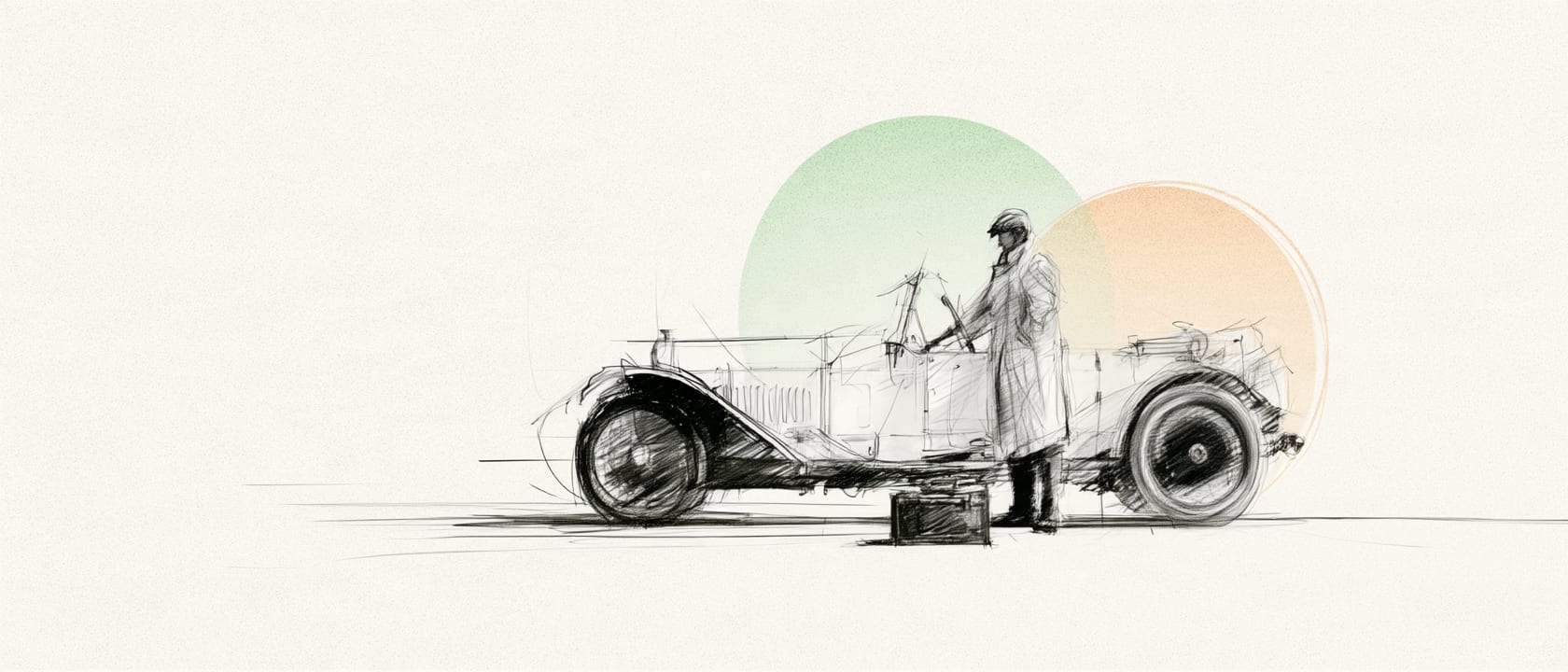
The case is real. Software is cheaper to write than it has ever been: in McKinsey's August 2026 survey, 32% of respondents said their organisation had decided against buying at least one software product because it could be built internally with agentic coding tools. The data stays where you put it, and the roadmap and the terms are yours. Your engineers know your processes better than any vendor, and can change things without waiting for anyone.
The catch is in the parts. Agents are assembled from pieces you do not own: the model, the cloud, the frameworks, the connectors. Each changes on its own schedule, and one update breaks another. You have not left your suppliers behind. You have taken on a dozen, and you alone answer when any of them changes its terms.
And cheaper to write is not cheaper to own. Build plans look cheap for two reasons. The people are already on the payroll, so the plan charges nothing for them while their old work goes undone. And the plan ends at launch, which is where the costs begin. When the agent breaks on a Sunday night, who in your company picks up?
The right people are the hard part. Some of the skills did not exist three years ago, and most companies have never hired for these roles. Writing the software has become a generalist's job. Running an agent has not: it takes a full team of specialists under one roof, as the cooling system did. The question is whether you want that roof to be yours for as long as the product exists.
Clayton Christensen described the pattern, and most young industries go through it. Early on a product is built as one piece: change the engine and you redesign the car. In the early 1900s, buying a car often meant hiring a chauffeur who was also a mechanic, because the machine needed one to keep running. Later the parts become standard, any garage can swap the battery, and the owner drives alone. Agents are at the first stage. The rest of your software does the same thing every time, on parts that stopped changing years ago. Models, guardrails and tests change every few months, so maintenance is not patching. It is redesign: a little with every model change, and all of it once, when the standards arrive.
You can also hire a firm to build it for you. Its engineers work on site for six months, hand over and leave. That is building by other means, with one more problem: when it breaks, nobody in your company knows how it works, so nobody fixes it, and soon nobody uses it. In September 2026 Gartner predicted that by 2028, 70% of enterprises will abandon agentic AI built for them by engineers a vendor places on site.
None of it is install and done. You have added a second business to the company, a software business with no end date.
Buy it
Buy the software, whether a seat on a frontier AI assistant for everyone or a packaged product for one job, and you get something that fits everyone well enough and no one fully. The vendor has the scarce people, and the cost is spread across every customer. New models arrive as updates you never had to plan, when the vendor chooses. Your data usually moves to their cloud, and the roadmap is theirs. For a known job where data can travel, this is a good trade, and most companies should make it more often. For a process only your business runs this way, or a decision you will have to explain to a regulator, it is not.
Buy it running
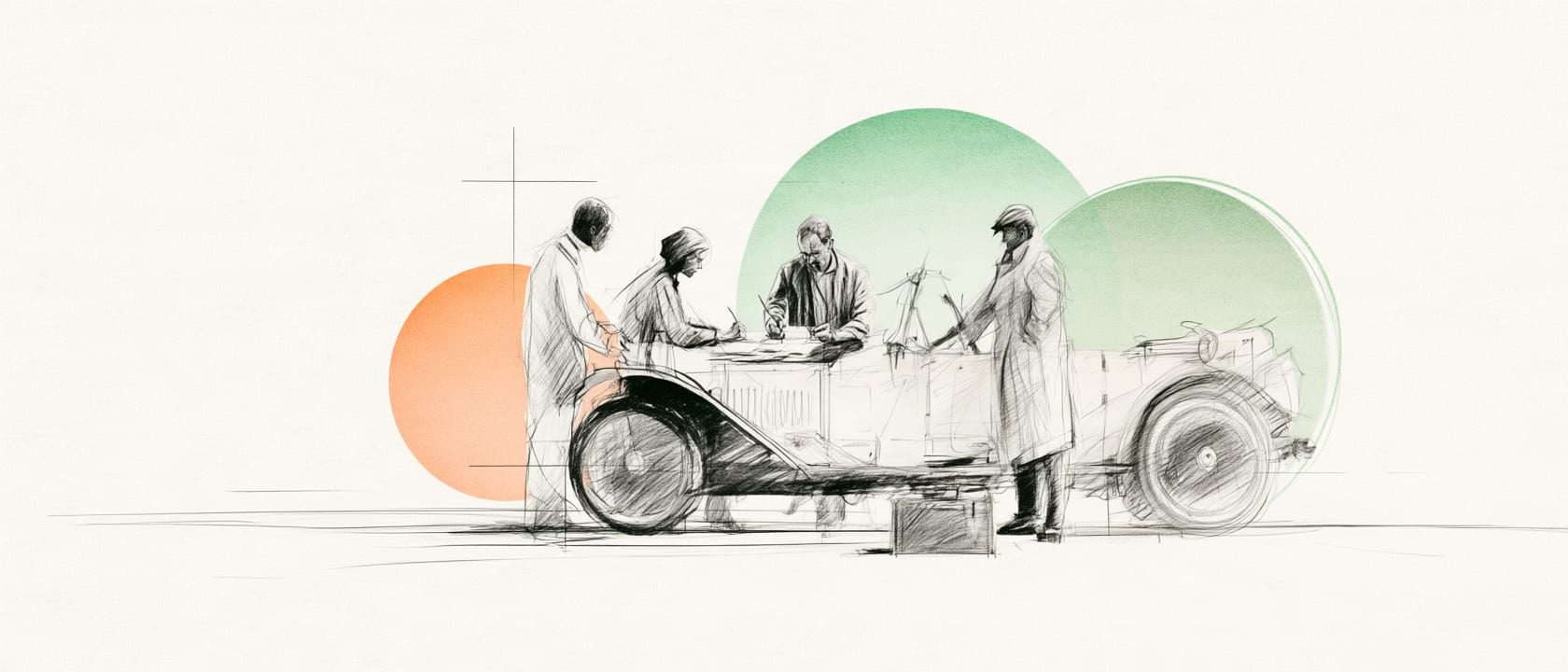
The third way is a product company that comes to you. Its engineers build on a product they already run for other customers, shape it to your processes and systems, keep your data where you need it, and stay to run and update it. Every customer shares the cost, and what the team learns elsewhere reaches you too. When the models change, the product changes with them. When the standards arrive, the rebuild is theirs to carry. When the agent breaks on a Sunday night, it is their phone that rings. And when a second team wants an agent, the people who built the first are still there.
This is what ai71 does, so weigh this section accordingly. It has costs. A product has a roadmap: most unusual requests are welcome, but one that only a single customer will ever need gets a no. You rely on one company, so the exit terms matter more here than anywhere. Gartner's warning is aimed at companies like us, since we also send engineers on site. The difference is what they leave behind. A firm leaves code that only its own engineers understand. We leave a product we keep running, with the same team on call, and every customer’s progress inside it. Our answer is the product underneath, and you should test it.
Buying it running does not buy you out of the work. You still need an owner for each process, an expert who defines what good work looks like, and your own security and audit people to review what gets built. The partner brings the engineers. You keep the decisions.
Which one is yours
Some companies should build. If you want AI to become a core capability, the way a technology company treats it, build. Hire the engineers, the product team, the designers. The few companies that pull this off tend to be technology companies that happen to hold a licence in their industry. It is tempting to decide that this is you.
So be honest about who is answering. I have a stake in this decision, and so does everyone in your meeting room. Engineers want to build, because it is the most interesting work on offer. The sponsor wants to own what gets built. And the pilot on the table was designed to look good. The useful question is not whether your people are good. It is whether they have run a system like this in production for a year, on call, through a model change. If not, they will be learning on one of your most important processes.
If that is not you, do not build, and do not pay a firm to build for you unless the people who will run it afterwards are already on your payroll. Buy it when a product already does the job and your data can travel. Buy it running when the process is yours alone and you do not have those people, and above all when the data has to stay home.
While the parts are still moving, stay close to the people who move with them.
Whichever you choose, look behind the demo. Every vendor's demo is a perfect first date, and tells you exactly as much as yours did. Ask what product sits underneath, who runs it when the room empties, how far they will bend it, and what you take with you if you leave: your data, your process definitions, your evaluation sets, and workflows that can run on another model. Ask us the same.
Cheaper to write is not cheaper to own.
First dates are easy. Marriage takes work.
Sources
- DeepMind. DeepMind AI reduces Google data centre cooling bill by 40%. 2016.
- Google and DeepMind. Safety-first AI for autonomous data center cooling and industrial control. 17 August 2018.
- PwC. PwC's 29th Global CEO Survey. 19 January 2026.
- McKinsey & Company. The state of AI in 2026: On the road to ROI. 25 August 2026.
- Gartner. Gartner Predicts 70% of Enterprises Will Abandon Agentic AI Built by Vendor Forward-Deployed Engineering by 2028. 29 September 2026.